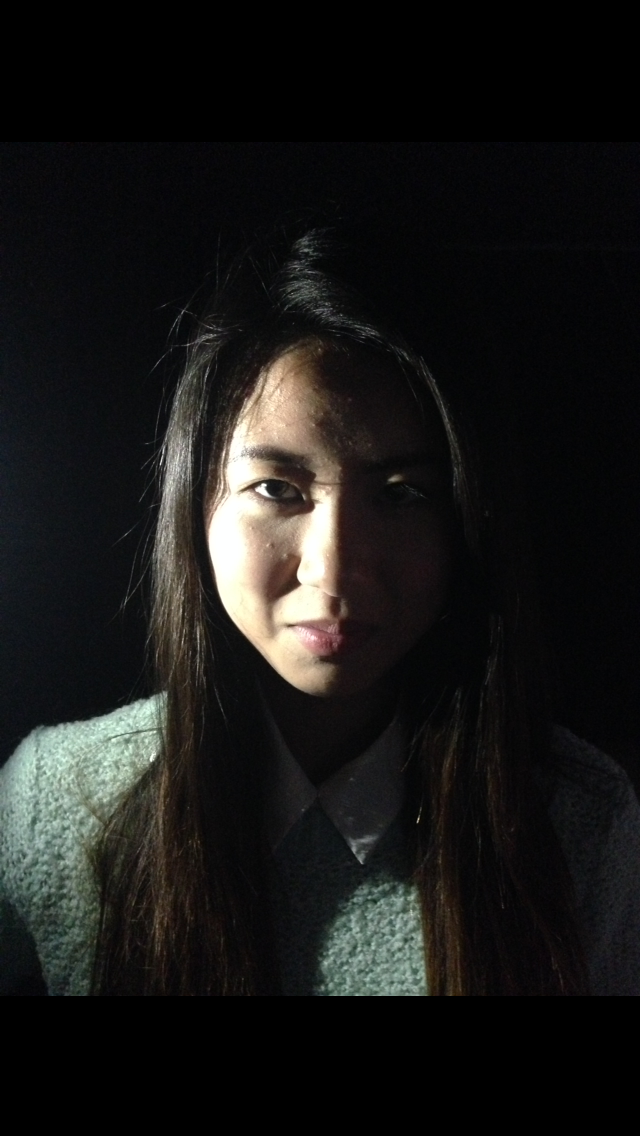
Storyboard


Throughout the planning process, we changed our ideas frequently.
 
Our final hand drawn storyboard is this:

 
We also had a rough, original storyboard, from which this shot is taken:


Deconstruction of Saw opening

SAW opening scene
At the beginning everything is dark and the diegetic sound of water can be heard, with the non diegetic eerie music, to accompany the opening title. The ambience is suspenseful. A medium shot of a man waking up in a bathtub is shown, allowing the audience to see the dark and dirty surroundings. The diegetic groaning and shouting of the man combined with the low key lighting creates a tense atmosphere. The off-screen deep voice gives a sense of mystery as the other man frantically looks round. When the lights are turned on, the blurry point-of-view shots give the audience a look at what the characters are experiencing. The first look at Dr Gordon, shows him as weak and vulnerable, looking around horrified, as he has his hands above his head, hiding under a metal bar. As his vision comes into focus, there's a fast tilt down, accompanied by a non diegetic wind instrument, so that the audience see what they are so shocked about- a dead body. The camera then zooms and spins upwards, in a comical way that contrasts the gruesome image. Fast paced straight cut editing is used to show the dead man's head wound and both hands, one of which has a gun, the other, a tape recorder. Straight cuts are used to show the different reactions of the two men, and as the dark-headed one starts to panic, the music intensifies, accompanied by the clanking of the chains which keep both men attached to opposite sides of the room. The camera movement gets more frantic, mimicking the fear and panic in the man.

Deconstruction of Taken

Deconstruction of Taken

The opening scene starts off with some old family footage on a hand held camera and melancholic non-diegetic piano music. Towards the end, the camera starts to flash giving the seemingly happy scene, a sinister effect. Suddenly a straight cut shows the protagonist Bryan Mills waking up, suggesting the first scene was a dream. Perhaps he is nostalgic for the memories of his daughter as a little girl. When he turns on the single lamp, the lighting is low key and eerie. The non-diegetic melancholic piano music adds to this effect. When Bryan gets up the camera focuses on the photograph he was looking at- of his teenage daughter, suggesting she plays a major part in the storyline.
          When he is in the shop, lots of over-the-shoulder camera angles are used to show the two men having a conversation. As he is wraps the present, close ups of his hands are used to show effort and precision. The music has stopped, to emphasise the focus being put in. Straight cuts are used between shots and the sound suddenly goes from silent to lots of diegetic background noise when Bryan arrives at the party. The party location is extravagant, with fountains and waiters. It is a picturesque setting with a classy white building surrounded by trees and flowers. When Bryan talks to Lenore, over-the-shoulder shots are used again, and diegetic party background noise can be heard.
          When Bryan watches his daughter on her new horse, a long shot is used, with other people's heads in the foreground. This makes him feel as though he has been excluded from Kim's life. The sad emotions he is feeling are juxtaposed by the contrapuntal sound of everyone singing happy birthday.

Lighting


Good quality and varied lighting is very important in any film, maybe more so, in horror. 


Side Lighting, suggests evil- split personality, something to hide.

Bottom lighting, creepy and mysterious

Front lighting, interrogation, light being shone in eyes

Top lighting, suggests angelic

Back lighting, gives the object/ person an outline, they're blocking the light

Natural lighting, innocent, nothing to hide

Special FX

Before the Filming Days, we made sure to practise with the special fx makeup.

At first, we weren't sure what cuts and bruises we were going to need, so we experimented on hands.


After we sorted out our plot, we knew we needed a head wound so we started practising:

However, at first we received negative feedback.


In the end, instead of a prominent head wound, we decided to simply drip blood from the victim's temple, to make sure it looked realistic:

Unlike the head wound, there was no way around the slit neck, so we used liquid latex, fake blood, and a variety of cosmetics such as eyeshadow and lipstick.


 Once we had a fake layer of skin over Yasmin's throat, we slit it open, and added red makeup inside the flaps. The finishing touch was the blood.


Music

Music

One of the most important parts of a movie is the score. Music can either make or break a horror film in particular.


Ideal pieces of music:

file://localhost/home/voony002.303/Downloads/The%20House%20of%20Leaves.mp3

opening.file://localhost/home/voony002.303/Downloads/Redletter.mp3

file://localhost/home/voony002.303/Downloads/Insidious.mp3


Deconstruction of Donnie Darko

Deconstruction of Donnie Darko

The first thing the audience see is a slow zoom up towards an unknown object in the road, with the only sound being a few quiet birds chirping- an off screen diegetic sound and some subtle eerie non diegetic music, which makes the atmosphere tense and ominous. The trees and scenery are vast and surround what we realise is a man, as the camera zooms closer and he starts to move. The piano starts to play as the camera does a 180 pan around the man so the audience can see the tranquil expression on his face. He is wearing checked trousers and a long sleeved top, most likely- pyjamas, suggesting he slept out all night on the road. His hair is messy and he has a tired expression. A point-of-view pan of the scenery, accompanied by the calm music creates a peaceful setting. The man then stands up and turns towards the camera to smile to himself, showing the audience his character is currently in a good mood rather than a melancholy one.
          After the screen fades to white there's a straight cut to a man on his bike, and the parallel non-diegetic music picks up tempo which is synonymous with the increased speed of the man on his bike. tracking shots are used to film the man cycling whilst he is travelling down the hill. Point-of-view shots are also used to allow the audience the same experience of the surroundings as the cyclist has.
          Next, the camera shows a close-up of an advertisement for a Halloween carnival, informing the audience that Halloween is approaching and this could play a part in the story of Donnie Darko, who is presumably the man on the bike. Although straight cuts are primarily used, the camera often moves from one point of focus to another with cutting. For example, the camera simply pans until the cyclist is out of view, before zooming closer to a mute scene with a man and a girl. This camera technique represents the way the cyclist sees his surroundings as he travels at a high speed.
          As he enters the house, the non-diegetic music begins to fade, suggesting the montage will end and the dialogue will begin. The note on the fridge says, "where is Donnie?" which is a narrative enigma, inferring the cyclist is Donnie, he has been sleeping out all night and people at home were only moderately worried about him- suggesting he is a teenager given quite a lot of freedom by his parents.